The Research Based Argument Essay a.k.a. Opinion Writing

We just finished up our second Lucy Calkins unit! This one was, "The Research-Based Argument Essay", which is quite a mouthful so I just call it "Opinion Writing". This unit was really fun because the kids got to pick sides and argue, which are two of their favorite things to do! :)

The first bend of the unit had all of us pick sides on the great "chocolate milk debate". We all decided whether or not chocolate milk should be served in schools and then used articles that came with the unit to read arguments for and against our claims. We worked on taking notes while researching and then writing essays at the end of the unit.


After we finished bend I (which took forever because winter break happened right in the middle of it and then there were two separate weeks of testing that got in the way) we moved on to bend II where the kids got to pick their topics, do the research on their own, and write another essay. This one was tough to manage so I figured I'd share some of the things I did to save my sanity while trying to coach 36 kids through the writing process.

Choosing a Topic
 Our fifth grade team had a little debate over whether to give students a list of choices for their topics and then provide them with the resources they would need to do research OR to leave it open for them to come up with their own topic and do the research themselves. I decided to leave it up to them just because I thought it would be more fun and I was interested in seeing what they would come up with, but our other fifth grade teachers stuck with a list of topic choices and I don't think that they found it was any less fun!

I decided that the best way for me to help them through the opinion writing process would be for me to write my own essay alongside them, so I decided to write an argument for changing the school calendar to a year round school schedule. (Many of them booed when I told them my idea but some were convinced by the end of this thing!)

Research
I let my kids do most of their research on their own and, while it was awesome to see some of the evidence they came up with, there were definitely some issues with doing it this way. They were distracted by advertisements (especially pictures of Donal Trump) and some found articles that were not from "scholarly" sources. SO, next year I think I may try doing this the other way and letting them choose from a set of topics that I have already done the research for.

I created a couple of graphic organizers to help kids take notes and keep track of their sources while they were doing research and modeled using them for my own topic before sending them off on their own.


Planning
Once they had at least three sources, I asked them to start thinking about their top three reasons to support their argument. I had them complete a planning page (below) and start putting in evidence from their research. (Again - I modeled doing this for my essay before having them do it on their own)


First Draft
My kids are the worlds slowest typers, so when they are drafting, I find that it's best to let them get all of their thoughts down on paper first and then I have them type up their writing to make editing easier. Our school does have personal google accounts for each of them, but it takes them SO LONG to find their login info, type it in, retype it in because they forgot one letter, etc... so I just made a class google account that we all get on at the same time and made folders for my different classes.

 (The only issue with this was that, toward the end of the unit, they figured out that they could get on each others' documents and mess with them so I had to threaten them with being sent to the principal and possibly suspended if I caught them on someone else's doc.)

Editing
Once they started turning in their drafts it was a bit chaotic because some were done and ready to edit and others were still typing, so I used google slides to keep track of everyone and started to do editing meetings with the ones who were done.
 
I kept track of who needed to attend which meetings just by writing on their rubrics that I used to score their first drafts. After they attended a meeting I would put a check and the date next to it.
 

For my editing meetings I focused on one feature of opinion writing at a time. For example, I got all the kids who didn't write leads, or did but needed to improve them, together and gave them instructions for writing a strong lead that I took straight from the learning progression for grade 5. I would then have them read a mentor text with a strong lead and identify the features that the writer included (e.g. stated their claim, listed reasons that they would develop later, explained why their topic mattered, etc...). Then I would model writing a lead for my own paper before having them work on editing theirs on the computer.

Before publishing their final drafts, I had them use a checklist to make sure that they included all of the necessary components of an opinion writing piece. The checklist is one that I created based on the Lucy Calkins learning progression for opinion writing but with more kid-friendly language and some features that I thought needed to be added in or removed (see bottom right page in picture below).


So anyways, that's how I made this unit work for my kids and I'm sure it will look different in every classroom depending on how many kids there are, how familiar they are with Lucy Calkins' style of teaching, how much technology is available, etc... but I just thought I'd share in case anyone could use some guidance or just a general overview of this unit. If you want to grab the planning pages and checklists that I used you can grab them from my TPT store here or by clicking on the picture below. Enjoy!

https://www.teacherspayteachers.com/Product/Opinion-Writing-Resources-3008859

The Book Whisperer

 This year I have a few students who never seem to finish books! I have tried so many different things to get them to read just one book from start to finish and made very little progress. I have helped them pick out books, read parts of those books together, given them time to read on their own, and the next thing I know they have returned the book and started a new one without finishing. Grr. 

I am all for allowing students to abandon books if they don't like them because...well...that's what real readers do! I want them to enjoy reading and I know that forcing them to read books that they don't like isn't going to help with that. But when a student abandons every single book I offer them and hasn't actually read a whole book by the middle of the school year I start to question everything.

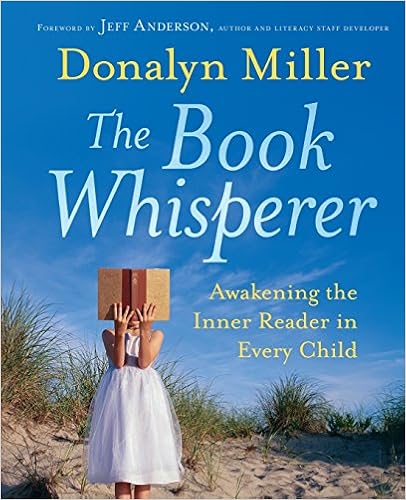
I decided that I needed to make a change and, after doing some research, ordered myself a copy of Donalyn Miller's book The Book Whisperer. If you haven't read this book I highly recommend it! (I liked it so much that it took me about two days to get through the entire thing!)

https://www.amazon.com/Book-Whisperer-Awakening-Inner-Reader/dp/0470372273/ref=sr_1_1?ie=UTF8&qid=1485377381&sr=8-1&keywords=The+Book+Whisperer

If I had to describe this book in three words they would be: Relatable, Helpful, and Inspirational. 

Relatable: Donalyn talks about how difficult it is to get our students excited about reading and to provide them with enough time to read independently during class time with all of the standards we are expected to cover and the testing that we have to do and the lack of emphasis on actually getting kids to like reading. Can I get an AMEN?!

Helpful: Donalyn has figured out a system that takes some of the pressure off of teachers but still keeps readers accountable. (See Reader's Notebooks below)

Inspirational: This book truly made me rethink the way I teach reading. It reminded me that the most important thing we can teach our kids is that reading is fun and enjoyable! No matter how well they do on their standardized tests or how many reading skills and strategies they are able to apply, they will not become better readers and they will not enjoy reading if we don't help them find books that they can get excited about and give them time to actually read them.

One thing that Donalyn recommends in her book is to have students use Reader's Notebooks in which they:
-Keep a tally of books that they have completed
-Write down information about books that they start (whether they finish them or not)
-Keep a list of books that they would like to read in the future
-Write responses about the books that they are reading

So, I created my own version of the Reader's Notebook and got my kids started on using them as soon as we returned from winter break. I have already seen a huge difference in their motivation to read and I am loving the response letters that they write to me. This system helps me keep track of what each kid is reading and provide them with the help that they may need whether that be branching out to read a different genre, choosing more challenging books, or selecting books that they find interesting.
https://www.teacherspayteachers.com/Product/Readers-Notebook-for-Upper-Elementary-Students-2981372


https://www.teacherspayteachers.com/Product/Readers-Notebook-for-Upper-Elementary-Students-2981372
If you are interested in trying out my version of the Reader's Notebook you can purchase it from my TPT store here.

The Week(s) After Thanksgiving

This week was These past two weeks have been tough to get through! I had such a hard time getting back into a normal routine (and bed time) after that short but sweet Thanksgiving break. I also had a hard time keeping up with the blog - this post was started last week but, clearly, I gave up on it and decided to return to it a week later. Anyway, we have crammed lots of learning into this short amount of time and I thought I'd share a couple of things that we have been working on!

https://www.teacherspayteachers.com/Product/Root-Words-Lum-Luc-and-Photo-2905046
We completed another week of Greek & Latin root words. This time we focused on roots that mean "light". The kids are used to the weekly routine by now and they are able to do most of the work independently. (I do make sure that we do the first day together so that we can discuss why words that contain the root are or are not exceptions just so they don't get confused)

https://www.teacherspayteachers.com/Product/Thanksgiving-Article-Trotting-For-a-Cause-2905152
Right when we got back I had them review a lot of the skills that we have already learned this year by answering questions about the Scholastic News article Trotting for a Cause. You can find the article by clicking on that link & the questions are in my TPT store for free in case you are interested in using them!

 
We went through a week of practicing Context Clues using the unit that I created last year. You can read all about how I teach this skill in this post and check out my Context Clues Unit on TPT.


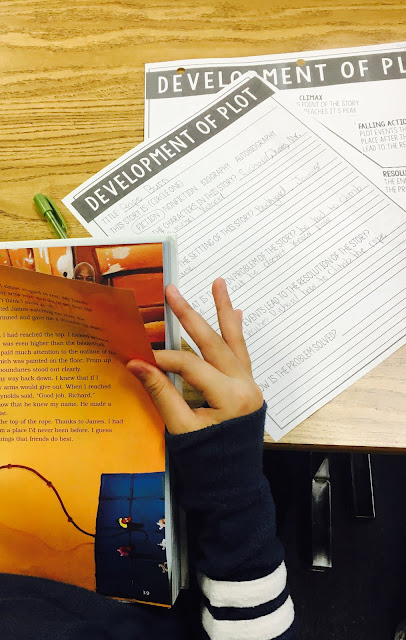
 This week we started working on Plot. To start off the unit, we completed an interactive notebook page. I had my students try to put the plot elements in the correct spots on the chart without help. Then, we discussed how all fiction stories follow this pattern and we glued the pieces down in the correct order. 

https://www.teacherspayteachers.com/Product/Plot-Unit-2913900

Next we watched two Pixar short films (which are amazing for teaching reading skills by the way) Day & Night and Partly Cloudy and filled out these plot worksheets:


Finally, we practiced charting the plot of a text from our reading series and students answered questions taken straight from some of our standardized tests. 

https://www.teacherspayteachers.com/Product/Plot-Unit-2913900

You can grab all of these worksheets and the interactive notebook page from my TPT store by clicking here.

Prefixes, Root Words, & Suffixes


This year I am really trying to step up my game with vocabulary instruction. My students are almost 100% English Language Learners, so it is super important for me to provide them with explicit vocabulary instruction. On top of simply learning new words, we are going to be studying Greek and Latin roots, prefix, and suffixes. Before diving into specific prefixes, root words, and suffixes, I figured it would be helpful if I explained what those things actually are, so I put together a minilesson and interactive notebook page to help me & my kids out.

https://www.teacherspayteachers.com/Product/Introduction-to-Prefixes-Root-Words-and-Suffixes-2871988
As we went through the presentation, I had students color in the appropriate parts of the word "unhelpful" and the labels: prefix, root word, and suffix.


Next, I had them cut and glue the pieces onto a page that will stay in their binders all year. They wrote down the meaning of each part of a word and then put it all together at the end to show how each part works together to create the meaning.


Now I'm working on creating units for each set of prefixes and suffixes that we'll be studying this year. We started out with the prefixes in-, im-, il-, and ir-.

Day 1:I introduced these prefixes using words that they had seen before and asked them to guess what they might mean. Once we established that these prefixes all mean "not", we completed this interactive notebook page from the Greek and Latin Roots Interactive Notebook made by Got to Teach.


-Day 2: I asked students to come up with as many words as they could that started with these prefixes. Before recording them, we discussed whether they actually meant "not" something or if they were exceptions. Then we used this sheet to write down our words.

Day 3: I wanted the kids to really see how the prefixes change the word, so I had them look up definition for a few words and then write the definitions of the same words with the prefixes added to them.

(This one is from another week when we did the prefixes un-, re-, and dis-)

Day 4: I gave students a list with about thirty words starting with the prefixes of the week and asked them to sort them into the correct categories.
So far I only have two of these units in my store:

In-, Im-, Il-, and Ir-
Un-, Re-, Dis-

I'll be uploading these units to TPT as I create new ones every week!

Personal Narrative Writing

Quarter 1 is over and we finally finished our first Unit of Study in the Teacher's College/Lucy Calkins series (I'm never really sure what to call this program so I figured I'd just give you all the names and let you decide!)

Our county decided to adopt the Units of Study for this school year, so last year all of us 5th grade teachers got to go to a training once a month (woohoo!) that was focused on using the scoring rubrics to analyze student work, plan strategy groups, and teach writing to small groups based on their needs. Units of study pretty much encourages you to teach writing the same way you teach reading - a quick mini-lesson followed by independent work while the teacher works with small groups and/or confers with individual writers.

When we first started going to the trainings a lot of us were overwhelmed and thought there was no way we would be able to make time for this writing workshop on top of teaching reading comprehension, vocabulary, word study, etc... I have to say though, I have been following these lessons day by day and I am SO happy with the results I have gotten. I've never seen 5th graders write so much and enjoy it!

One thing I love about this program is that you are supposed to give an on-demand assessment at the beginning of each unit to see what your students already know before you dive into the mini-lessons. Although these do take quite a while to score, when they completed their first personal narrative after two weeks of lessons and I was able to compare them to their on-demands, I was so impressed by how much my kids had improved.

Anyway, as we were going through, I started to create a few resources that I thought would be helpful for me and my students and I thought I'd share them with you in case you are about to embark on teaching personal narratives! :)

I wanted to be able to monitor each student's progress throughout this unit without having to open their folders and take out their writing and check scores every time, so I created this easy form to keep track.

https://www.teacherspayteachers.com/Product/Personal-Narrative-Writing-Resources-2868266

One day, I was looking for my notes for the mini-lesson and a poster that I wanted to share with them and a mentor text and I could not remember where I had put each of those things, so I realized it was time to get more organized. I created a binder with all the resources I needed to grab and use during writing time.
https://www.teacherspayteachers.com/Product/Personal-Narrative-Writing-Resources-2868266


In the binder I have a copy of the Personal Narrative rubric, a copy of my plans for each and every lesson, and copies of mentor texts that I will read to them.

Speaking of mentor texts, whether or not you are using the Units of Study, I absolutely recommend using Eleven by Sandra Cisneros to model personal narrative writing. It is such a powerful story! It's so well written that you really feel like you are there in the classroom with poor Rachel as her birthday is ruined. Seriously, read it to your class...read it for fun...read it however you want. It's amazing! Plus, she includes so many elements of narrative writing that we want our students to use!

(Our writing curriculum came with a copy of this passage but you can just google the title and find multiple PDF copies of it online!)

Once we went through the first bend of this unit I decided to take a break from the daily lessons and go through the Personal Narrative Writing checklist one feature at a time. I created these posters so that we could quickly refer to them and see what is expected in each category in order for our writing to meet the Fifth Grade level expectations.

https://www.teacherspayteachers.com/Product/Personal-Narrative-Writing-Resources-2868266

Structural Patterns a.k.a. Text Structure

This week I've been teaching structural patterns of nonfiction text.  I used my own unit to introduce all five structures as well as resources from several other teachers! 

Every day I introduced a new structure using one of my posters for the kids to refer to that include descriptions of each text structure, visuals, and key words.
https://www.teacherspayteachers.com/Product/Identifying-Structural-Patterns-in-Nonfiction-Text-2162080
Then, we completed a worksheet that allowed them to see a few examples of passages using the text structure of the day.
https://www.teacherspayteachers.com/Product/Identifying-Structural-Patterns-in-Nonfiction-Text-2162080 
 
 On the fifth day we completed a review packet and a paired passage so they could practice answering the kinds of questions that will be on our quarterly tests and SOL's at the end of the year.
https://www.teacherspayteachers.com/Product/Identifying-Structural-Patterns-in-Nonfiction-Text-2162080 

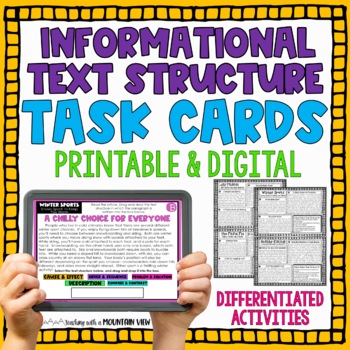
Now that I have introduced all five structures, we are going to spend the next five days practicing identifying each of the structural patterns and reviewing NONSTOP until they have this skill down. One of my favorite ways to review a new reading skill is by using task cards. We'll be using these from Teaching With a Mountain View to review daily.

 Informational Text Structures Task Cards
We are also using these task cards that come with bookmarks to help students remember what each structure is. Each card has a short paragraph on it and students select the correct text structure from four choices. It comes with an answer key which makes this activity easy to grade and use as a formative assessment! :)


I finally got around to conferring with readers this week! I think this is such an important thing to do because it helps keep my students accountable for actually reading during Read-To-Self time. Just knowing that I am going to check in on them to see how much they've read and ask them questions about the story puts a little bit of pressure on them to get it done! I'm using these free forms from Teaching to Inspire and they have been working out fabulously!


Back to Top